Business builder · Operator · Author · AI systems creator
I build businesses and the systems that run them.
For more than two decades, my work has moved from sales and buildings to markets, software and AI-assisted work. The material changes. The discipline does not: understand the real problem, make the important decisions explicit, and build a system that keeps working after the conversation ends.

Selling What's Complicated
From Instinct to Repeatability
A practical field system for people selling complex offerings — from founder instinct to a repeatable, evidence-based sales motion.
What I'm building now
Four expressions of one principle: making important work explicit enough to understand, test, improve and repeat — the same discipline that built the businesses on the Work page, now applied to AI-assisted work and to selling itself.
One practice, five systems
On paper the chapters look unrelated — insurance, buildings, trade, software. They are the same practice in progressively more abstract materials: learning to build systems where the joints between disciplines hold.
The systems I build
- 2000
People & commercial systems
Sales & financial services
The first system was other people: how organisations sell, train and decide. It taught me that every system is really a set of incentives.
- 2010
Physical spaces & infrastructure
Synchronos
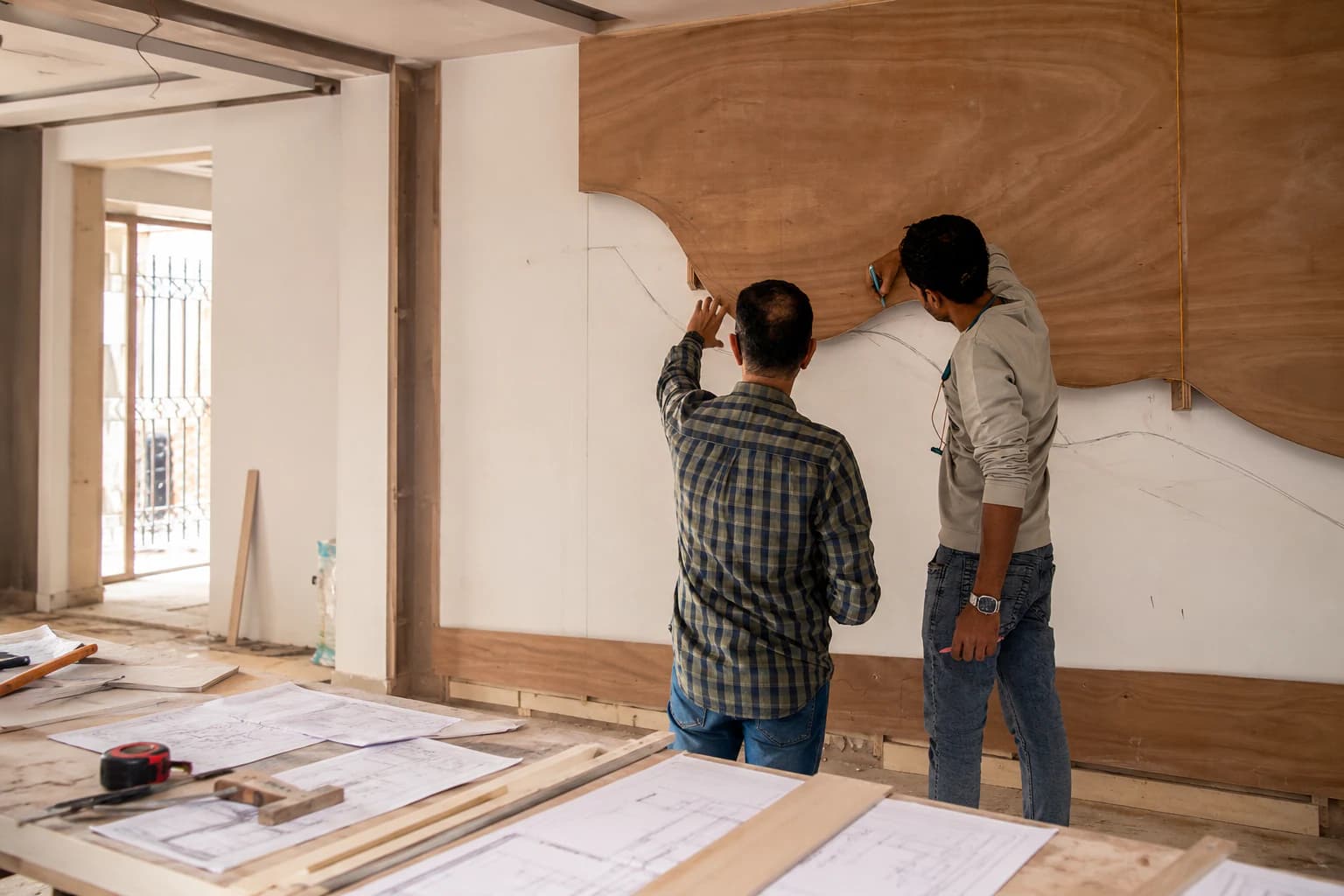
One accountable team for everything in a building that has to work together — automation, AV, security, interiors. The joints between trades are where projects fail.
Explore - 2024
Markets, trade & partnerships
T57
The commercial architecture an AI-native food ecosystem needs before it launches: which markets, at what price, through which partners.
Explore - 2025
Enterprise software & AI
NxSync
Software that starts from the business problem, not the feature list — an AI-native ERP, secure collaboration, built in reviewable stages.
Explore - 2025
Decisions & continuity
VeraKeep
The most abstract material of all: the reasoning behind decisions. VeraKeep keeps it from disappearing between sessions and AI tools. Formerly Spine.
Explore
These overlap rather than replace each other. Commercial experience shaped how I built Synchronos; coordinating trades on real sites shaped how I lead product work; that product work produced NxSync, and its own friction produced VeraKeep. Several run in parallel today.
Built and operated
Founded and ran a smart-infrastructure company for more than a decade, with founder-level accountability for the outcome.
Entered and developed markets
Shaped international commercial strategy and market entry across India and MENA.
Delivered multidisciplinary systems
Coordinated design, automation, AV, security, networking and interiors across thousands of real projects.
Conceived and advanced products
Directs an AI-native enterprise-software portfolio, from secure collaboration to delivery governance.
How the work actually goes
Not a process diagram — one real example. This is how VeraKeep, the tool that keeps AI-assisted work traceable, went from a problem I noticed to something in daily use.
- 01
Learn
I watched our team move faster with AI tools — and quietly lose the reasoning behind decisions.
- 02
Understand
The real problem was not the tools. It was the joint between sessions, where context disappeared.
- 03
Design
Define what "finished" means before starting. Work in bounded, reviewable pieces. Record why each decision was made.
- 04
Build
We adopted the habits by hand first — then turned them into a product, VeraKeep, so the discipline was a system, not a resolution.
- 05
Improve
Watch it in real use — including on this website — keep what works, and carry the lesson into the next project.
Recent writing
Still curious
I am always glad to compare notes on building businesses, entering new markets, or making AI-assisted work dependable. If something here overlaps with what you are working on, write to me.