Multi-tenant Commerce · Product Concept & Direction
One commerce architecture behind many distinct storefronts
A Synchronos project
Most e-commerce builds answer an easy question: how does one brand sell online? This platform was built against a harder one: how do several distinct brands, each with its own identity, catalogue and buyers, run on one architecture without ever bleeding into each other?
Separate worlds, shared machinery
The design principle is separation of worlds. A buyer sees one brand: its storefront, categories, promotions and checkout. A seller sees one operation: their inventory, orders, pricing and analytics. The platform underneath sees tenants — isolated contexts sharing common machinery for catalogue, cart, orders and fulfilment, with branding and feature configuration per tenant.
That inversion, identity at the edge and capability at the core, is what makes the architecture worth building. A new storefront becomes configuration, not a new codebase.
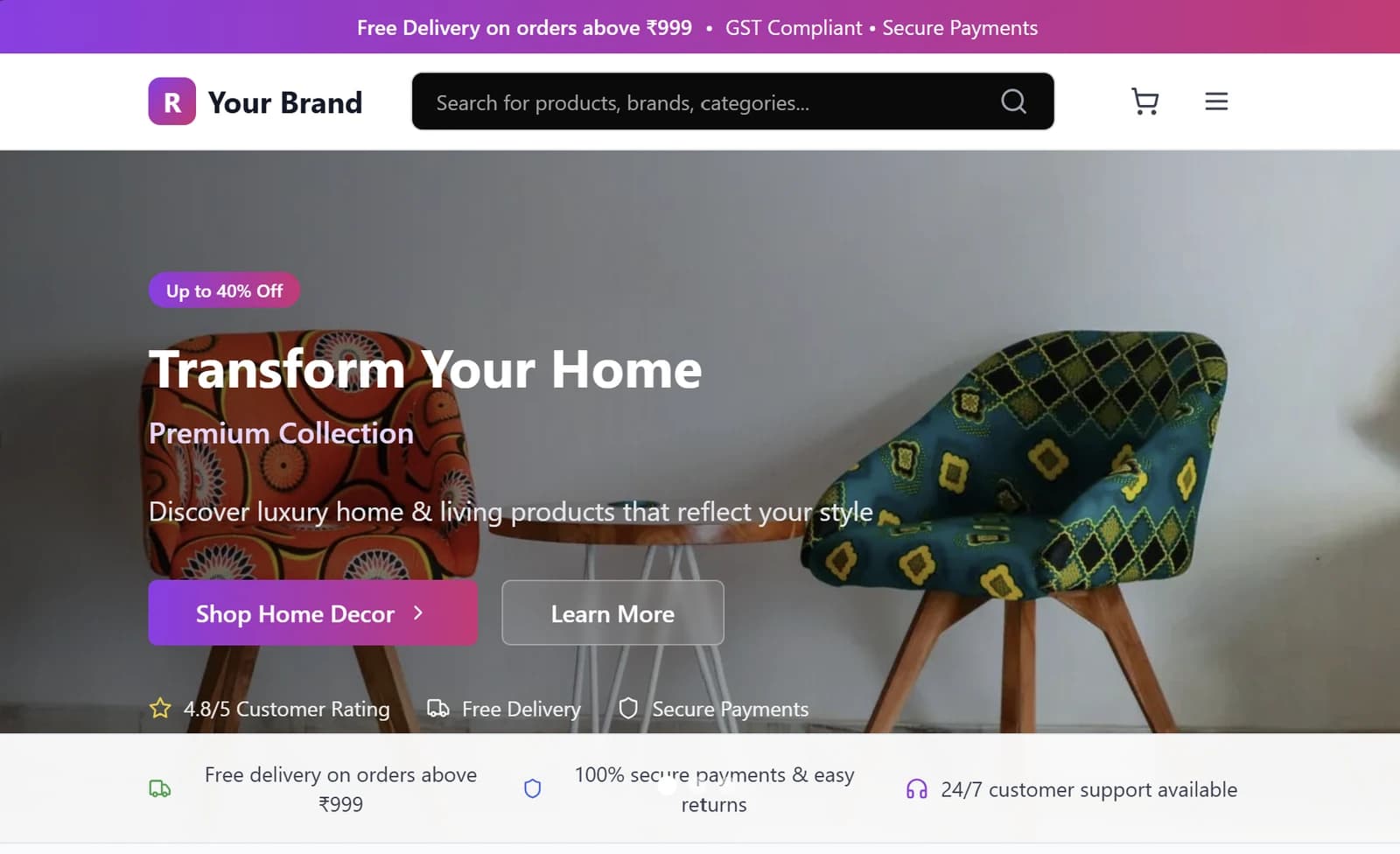
Both sides of the counter
The buyer experience covers the full journey: browsing by category, product detail, search, wishlist, cart, checkout and order history. The seller portal covers the operation behind it: product and category management, inventory, order processing, promotions and analytics. Building both sides forced honesty about the workflows — every buyer feature creates a seller obligation, and the seller portal is where those obligations are either handled or quietly become support tickets.
Commerce infrastructure that touches money and movement (payments, shipping, communications) is designed adapter-first, so real providers can be attached per tenant without rewriting the core. The build includes India-specific groundwork such as GST-aware invoicing logic.
Current stage
A completed application: buyer storefront, seller portal, multi-tenant catalogue, orders, promotions and analytics, with adapter-ready payments, shipping and communications. It is a completed build, not a platform currently operating live storefronts.
What the work taught me
Multi-tenancy is a promise you have to keep everywhere at once — in the database, the queries, the branding, the analytics. One leak anywhere and the architecture is fiction. Directing this build taught me to review isolation the way an auditor reviews accounts: assume nothing, verify the boundary in every feature.
The tenant-isolation discipline built here carries directly into QuoteFlow AI and the NxSync platform work.